
Girls Boarding School in India: The Complete 2026 Guide for Parents
If you’ve spent the last few weeks googling “girls boarding school in India” at midnight, comparing prospectuses, and wondering whether you’re making the right call for your daughter — you’re not alone, and you’re not overthinking it. According to the ASER (Annual Status of Education Report) 2024 findings, learning outcomes and school environment quality vary sharply across India, which is exactly why so many parents are now looking beyond their local day school toward a structured, fully residential environment for their daughters. [Source: ASER Centre, asercentre.org]
This guide is built for that decision. We’ll walk through why parents choose a girls boarding school in India, what actually matters when evaluating a girls residential school, how IGCSE compares with ICSE and CBSE for boarding, and a ranked, detailed look at the top 10 girls boarding schools in India — researched directly from each school’s official website, with real differentiators, fees where publicly available, and who each school is genuinely best suited for.
List of The Top 10 Girls Boarding Schools in India | Admissions Fees Details 2026-27
Note on ratings and fees: every entry below is drawn from each school’s own official website plus its most recent published fee circular, where one was publicly available. Where a school does not publish a fixed fee (many revise and communicate fees directly to admitted families), we’ve said “contact school” rather than estimate — please confirm the exact, current figure with the school’s admissions office before applying.
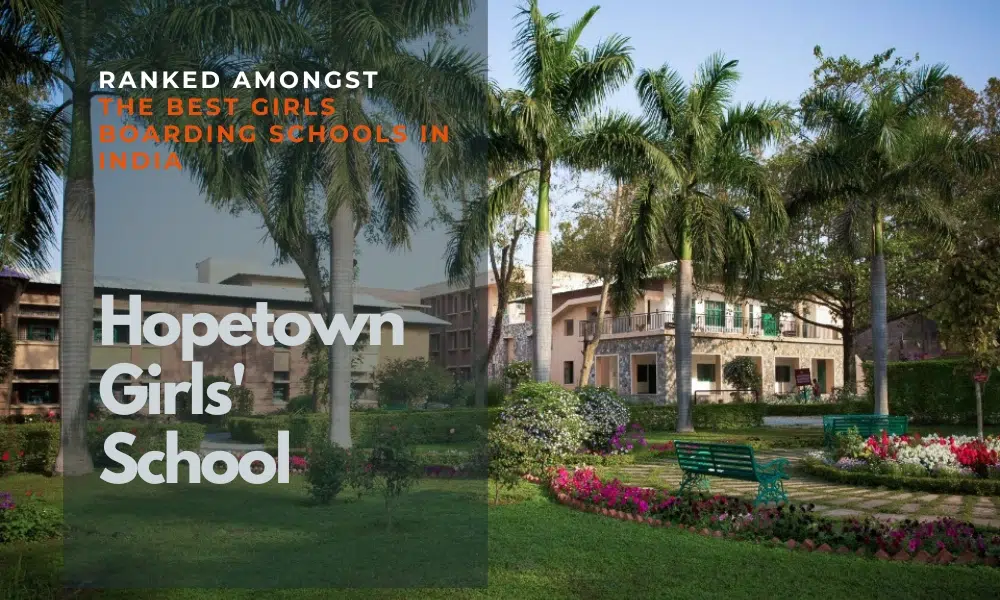
1. Hopetown Girls’ School — Selaqui, Dehradun, Uttarakhand
4.7 (142 Reviews)
Established: 1999 · Affiliation: CAIE (Cambridge Lower Secondary + IGCSE), CISCE (ICSE + ISC), College Board (AP Examinations), Trinity College · Google rating:
School Details:
Hopetown is one of the few fully residential, all-girls schools in India running Cambridge IGCSE and ICSE/ISC in parallel, which means a family can defer the “India vs abroad” decision without switching schools mid-way. Set in the Selaqui foothills just outside Dehradun, the campus is built specifically for a girls-only cohort — not adapted from a co-ed layout. Alumnae have gone on to IITs, PwC, NIFT, and international roles at companies like Airtel Africa, and the school runs mid-term educational journeys alongside its sports, theatre, and creative arts programmes as part of a genuinely holistic (not just brochure-holistic) routine.
Detail |
Information |
|---|---|
| Curriculum | CAIE (Cambridge Lower Secondary, IGCSE), CISCE (ICSE, ISC), AP (College Board), Trinity College |
| Grades | V to XII |
| Fees (per year) | |
| Student-teacher ratio | |
| Location | Rajawala Road, PO Selaqui, Dehradun – 248011, Uttarakhand |
| Facilities | Science & computer labs, theatre, sports complex, creative arts studios, medical centre, residential houses |
| Contact | 0135-6170800 to 809 · admissions@hopetown.in · hopetown.in |
Best for: Families who want the flexibility of two globally recognised boards (Cambridge + ICSE/ISC) under one roof, in a fully residential, all-girls, safety-first environment.
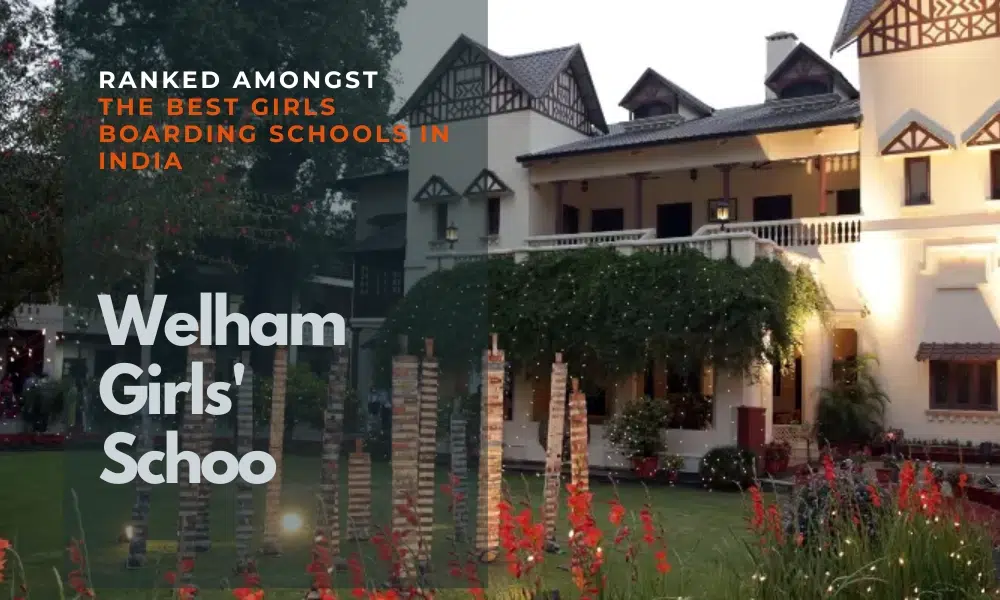
2. Welham Girls’ School — Dehradun, Uttarakhand
Established: 1957 · Affiliation: CISCE (ICSE/ISC); Cambridge International accreditation
School Details:
One of India’s oldest and most recognised names in girls’ education, Welham grew from just ten students in 1957 into one of the country’s most sought-after boarding schools, and is a member of the Round Square group and the Indian Public Schools’ Conference. It maintains a staff-to-student ratio of roughly 1:10, with senior-class subject groups sometimes as small as six or seven students. Admission is offered mainly at Classes VI, VII, and XI, so families need to plan entry points in advance.
Detail |
Information |
|---|---|
| Curriculum | CISCE (ICSE/ISC) |
| Grades | VI to XII (entry mainly at VI, VII, XI) |
| Fees (2026-27, per official fee circular) | School Fees: Rs. 11,10,000/year; Admission Fee: Rs. 1,50,000 (one-time); Security Deposit: Rs. 5,55,000 (refundable/adjustable); Imprest Deposit: Rs. 60,000; Uniform Deposit: Rs. 20,000 |
| Student-teacher ratio | 1:10 |
| Location | No. 19, Municipal Road, Dalanwala, Dehradun – 248001, Uttarakhand |
| Facilities | Science & computer labs, resource centre/library, music school, art studios, multiple sports facilities, six boarding houses |
| Contact | 0135-2654754 / 6670100 · welhamgirls.com |
Best for: Families prioritising legacy, discipline, and a strong alumnae network, who are comfortable with fixed entry points and a premium fee structure.
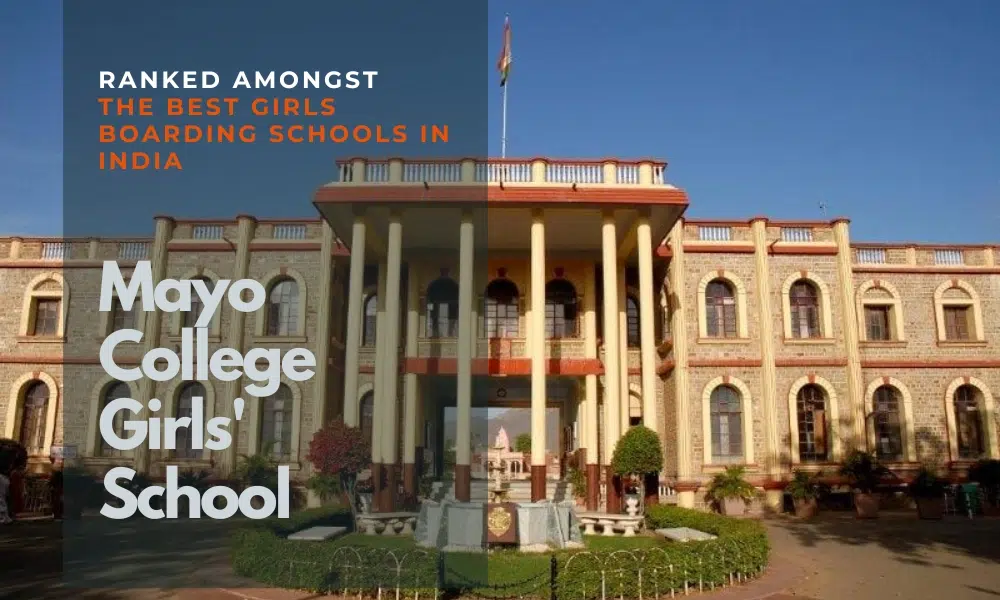
3. Mayo College Girls’ School — Ajmer, Rajasthan
Established: 1987/88 · Affiliation: CISCE (ICSE/ISC); Cambridge IGCSE & Lower Secondary added from April 2022
School Details:
Set against the Aravalli Hills on a large campus under the Mayo College General Council, Mayo College Girls’ School (MCGS) is one of Rajasthan’s most established all-girls boarding institutions, following a house system named after Rajasthani princesses. It began adding the Cambridge Curriculum alongside ICSE/ISC from 2022, giving newer intakes a dual-board option similar to Hopetown’s model, though on a smaller scale.
Detail |
Information |
|---|---|
| Curriculum | CISCE (ICSE, ISC); CAIE (Cambridge IGCSE & Lower Secondary) |
| Grades | IV to XII (new entrants mainly at IV, V, VII, XI) |
| Fees | Approx. Rs. 9-10 lakh/year tuition + boarding (published third-party estimate) plus a refundable caution deposit — confirm exact current figure with school |
| Location | Mayo Link Road, Nagra, Ajmer – 305007, Rajasthan |
| Facilities | Six boarding houses, dining hall, stables/equestrian facilities, synthetic basketball and tennis courts |
| Contact | mayocollege.com admissions office |
Best for: Families in Rajasthan and Central India seeking a heritage institution with an emerging dual-curriculum option (ICSE/ISC + Cambridge).
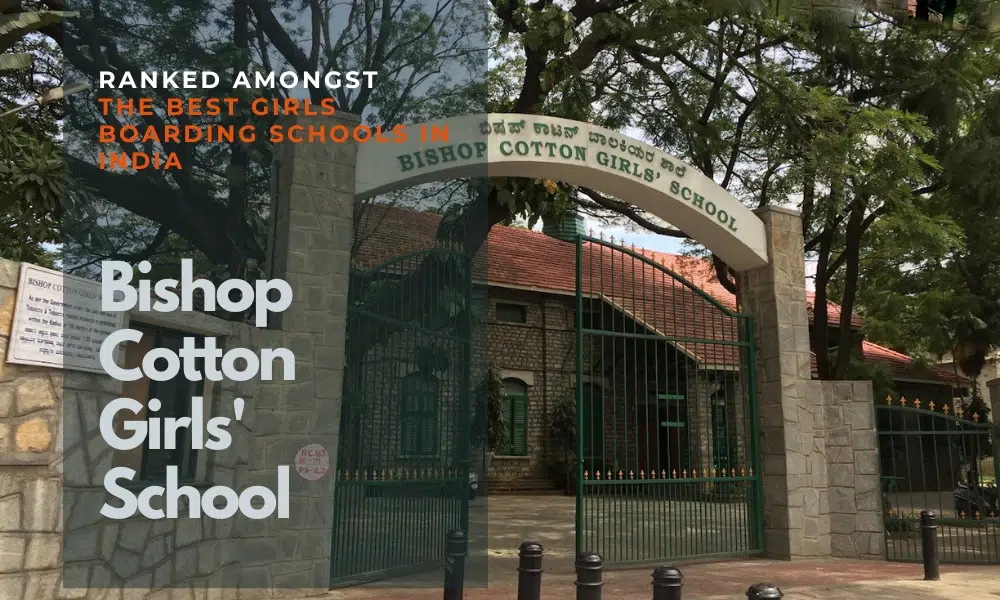
4. Bishop Cotton Girls’ School — Bengaluru, Karnataka
Established: 1865 · Affiliation: CISCE (ICSE/ISC)
School Details:
One of the oldest girls’ schools in Asia, Bishop Cotton Girls’ School (BCGS) has educated generations of women across medicine, engineering, and the corporate world from its heritage campus on St. Mark’s Road. Important for boarding-focused families: BCGS is a day-cum-boarding school, not fully residential — the majority of its student body are day scholars, with boarding available as an option rather than the default campus model. Its 800-seat auditorium, 30,000-book library, and century-and-a-half legacy make it a strong ICSE choice for South Indian families, provided the day-cum-boarding structure fits what you’re looking for.
Detail |
Information |
|---|---|
| Curriculum | CISCE (ICSE, ISC) |
| Grades | LKG to XII |
| Fees | Contact school for current fee structure (day and boarding fees differ) |
| Location | 1, St. Mark’s Road, Bengaluru – 560001, Karnataka |
| Facilities | 800-seat auditorium, 30,000-volume library, science labs, boarding block, extensive sports grounds |
| Contact | bishopcottongirls.com |
Best for: Bengaluru-based and South Indian families who want a historic ICSE institution and are open to a day-cum-boarding model rather than full residential life.
5. Scindia Kanya Vidyalaya — Gwalior, Madhya Pradesh
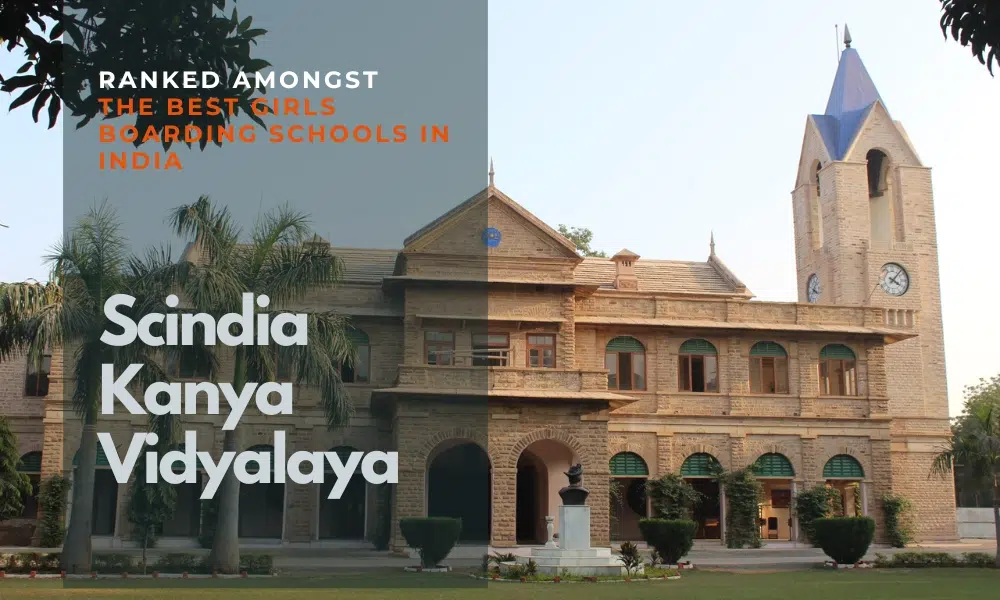
Established: 1956 · Affiliation: CBSE
School Details:
Founded by the Late Rajmata of Gwalior and inaugurated by India’s first President, Dr. Rajendra Prasad, Scindia Kanya Vidyalaya (SKV) is one of Central India’s most historically significant all-girls institutions. It maintains a 10:1 student-teacher ratio, runs five residential houses, and blends CBSE academics with initiatives like the Dharohar heritage festival and the SANKALP entrepreneurship programme.
Detail |
Information |
|---|---|
| Curriculum | CBSE |
| Grades | VI to XII (Science, Humanities, Commerce streams at +2) |
| Fees | Contact school for current fee structure |
| Student-teacher ratio | 10:1 |
| Location | Moti Mahal Road, Gwalior, Madhya Pradesh |
| Facilities | Five boarding houses, digital classrooms, sports facilities, heritage campus |
| Contact | skvgwalior.org |
Best for: Central Indian families wanting a CBSE-aligned option with deep heritage and an experiential, values-driven pedagogy.
6. Ecole Globale International Girls’ School — Dehradun, Uttarakhand
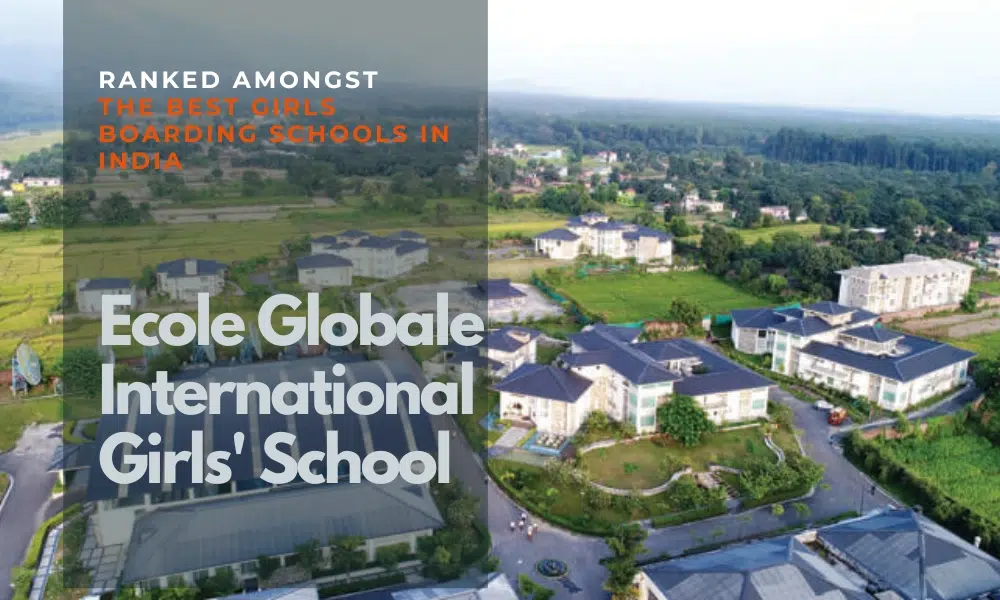
Established: 2012/13 · Affiliation: CBSE (up to Grade X), CAIE (Cambridge, senior secondary)
School Details:
Founded by Amarjeet Juneja on a 40-acre campus near Sahaspur, Ecole Globale is a newer, tech-forward entrant among Dehradun’s cluster of girls’ boarding schools, blending CBSE for the primary/middle years with Cambridge (CAIE) at senior secondary level. It maintains a 1:10 teacher-student ratio and draws students from across India and overseas.
Detail |
Information |
|---|---|
| Curriculum | CBSE (Grades I-X), CAIE/Cambridge (senior secondary) |
| Grades | IV to XII |
| Fees | Contact school for current fee structure — published aggregator estimates vary widely and are not verified |
| Student-teacher ratio | 1:10 |
| Location | Near Sahaspur, Horawala, Dehradun, Uttarakhand |
| Facilities | Digital classrooms, swimming pool, shooting range, equestrian and squash facilities, theatre |
| Contact | ecoleglobale.com |
Best for: Families who want a newer, amenity-rich campus with a low student-teacher ratio and a CBSE-to-Cambridge progression.
7. Heritage Girls’ School — Udaipur, Rajasthan
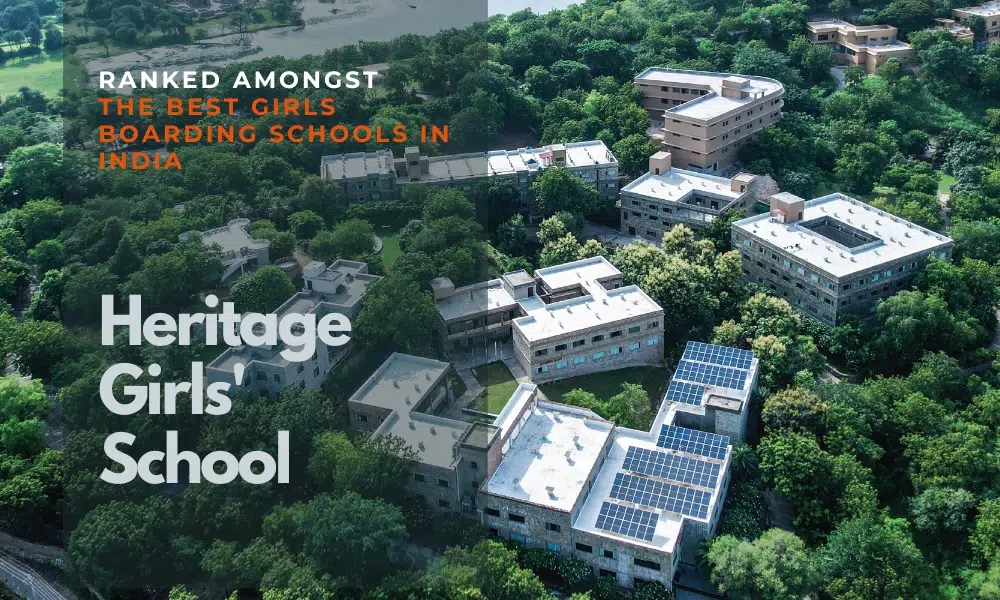
Established: 2014 · Affiliation: CBSE; Cambridge Assessment International Education (CAIE)
School Details:
Located on the banks of Lake Baghela near Eklingji, Heritage Girls’ School is a newer but fast-recognised entrant, ranked among India’s top girls’ boarding schools by Education Today within a few years of opening. It runs a low teacher-student ratio (reported between 1:5 and 1:10 depending on source) and offers merit-based scholarships for strong Class X performers.
Detail |
Information |
|---|---|
| Curriculum | CBSE; CAIE (Cambridge) |
| Grades | IV to IX and XI |
| Fees | Merit scholarship of Rs. 25,000/year for 90%+ Class X scorers; 20% sibling discount on tuition; contact school for full fee structure |
| Student-teacher ratio | Reported 1:5 to 1:10 |
| Location | NH-8, Eklingji, Udaipur – 313202, Rajasthan |
| Facilities | Olympic-length swimming pool, fitness centre, 200m athletic track, dance and music studios |
| Contact | heritagegirlsschool.com |
Best for: Families in Rajasthan/Western India wanting a newer campus with strong sports infrastructure and a genuinely low class-size ratio.
8. La Martiniere for Girls — Kolkata, West Bengal
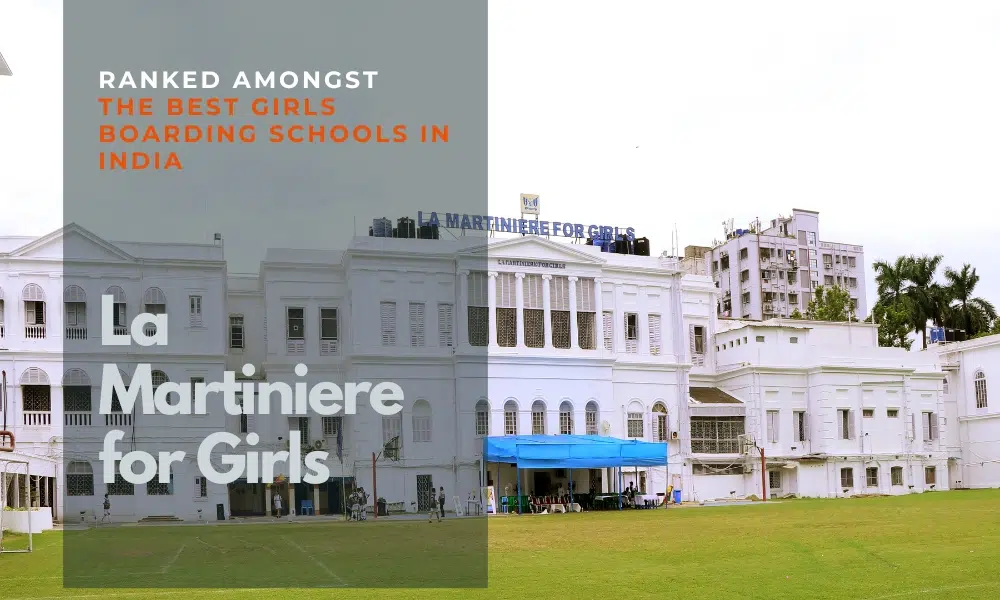
Established: 1836 · Affiliation: CISCE (ICSE)
School Details:
One of India’s oldest schools, founded under the will of Major General Claude Martin, La Martiniere for Girls carries enormous historical prestige in Kolkata. Important note for boarding-focused families: La Martiniere for Girls operates primarily as a day school, with only a small number of boarders — it is not a fully residential campus in the way the other schools on this list are. It’s included here for its academic reputation and ICSE strength, but families specifically seeking a full-boarding environment should weigh this carefully.
Detail |
Information |
|---|---|
| Curriculum | CISCE (ICSE) |
| Grades | Pre-Nursery to XII |
| Fees | Contact school for current fee structure |
| Location |
14, Sarojini Naidu Sarani (Rawdon Street), Kolkata – 700017, West Bengal |
| Facilities | Heritage campus, library, science labs, limited boarding accommodation |
| Contact | lamartiniere.co |
Best for: Kolkata families who want ICSE academic prestige and are open to a primarily day-school structure with limited boarding rather than full residential life.
9. Vidya Devi Jindal School — Hisar, Haryana
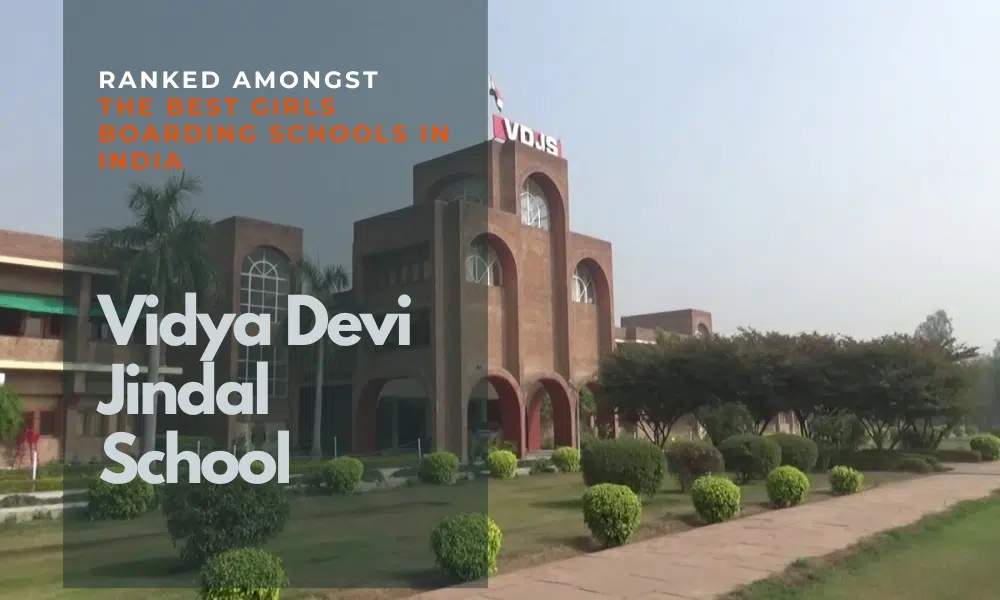
Established: 1984 · Affiliation: CBSE
School Details:
Set on a 47-acre campus about 150km from New Delhi, Vidya Devi Jindal School (VDJS) is a fully residential all-girls institution recently recognised among India’s top five girls’ boarding schools by Education Today, and rated Haryana’s No. 1 boarding school in several recent industry surveys. It runs a robust CBSE senior-secondary offering of 20+ subject combinations alongside dedicated career counselling.
Detail |
Information |
|---|---|
| Curriculum | CBSE |
| Grades | IV to XII (entry mainly IV-IX and XI) |
| Fees | Bi-annual payment structure — contact school for current fee circular |
| Location | Delhi Road, Hisar, Haryana |
| Facilities | 47-acre campus, multiple hostels, sports complexes, library |
| Contact | vdjs.edu.in |
Best for: North Indian families seeking a fully residential CBSE option with a large campus, strong career counselling, and recent industry recognition.
10. Mussoorie International School — Mussoorie, Uttarakhand
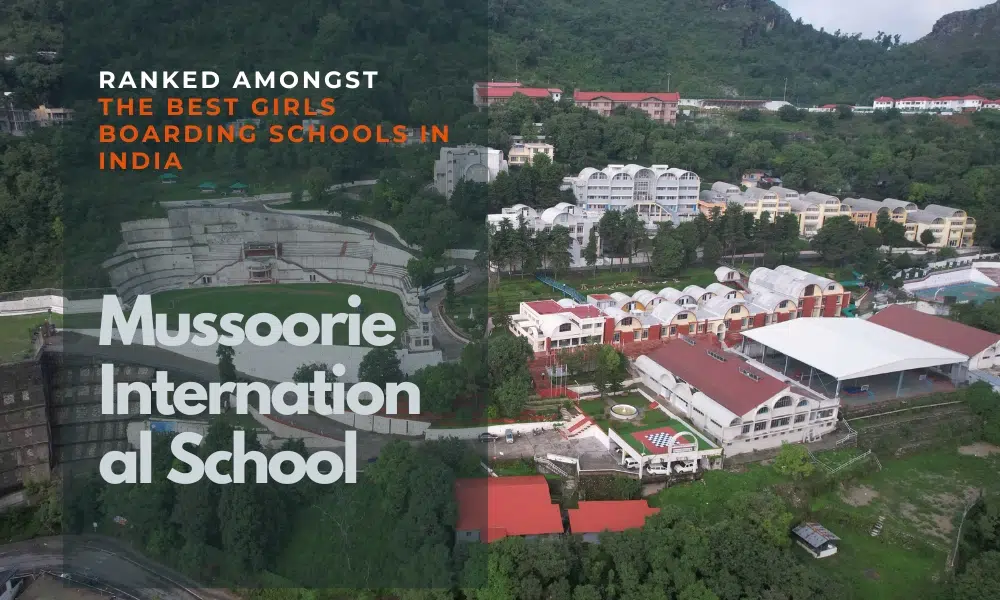
Established: 1984 · Affiliation: CISCE (ICSE/ISC), CAIE (Cambridge IGCSE), International Baccalaureate (IB)
School Details:
Perched in the Mussoorie hills on a 40-acre pine-forested campus, MIS is a fully residential, all-girls school offering a genuinely triple-curriculum choice (CISCE, Cambridge, and IB) — unusual breadth for a single girls’ boarding school. It has welcomed students from 27+ countries and is accredited by the Council of International Schools (CIS), with a dedicated wellness centre and housemother-led pastoral care system.
Detail |
Information |
|---|---|
| Curriculum | CISCE (ICSE/ISC), CAIE (Cambridge IGCSE), IB |
| Grades | I to XII |
| Fees | Contact school for current fee structure — total annual cost is at the premium end of this list per third-party estimates |
| Location | Charleville, Mussoorie, Uttarakhand |
| Facilities | 40-acre pine forest campus, 20-bed wellness centre, housemother system, international student body |
| Contact | misindia.net |
Best for: Families who want maximum curriculum flexibility (three boards under one roof) in a classic Himalayan hill-station boarding setting.
Why Choose a Girls’ Boarding School in India?
Safety, without the guesswork
Safety is the first — and most important — question every parent asks. A well-run girls residential school isn’t just a hostel attached to a school; it’s a closed, controlled ecosystem: female wardens and house-mothers, 24/7 on-campus medical staff, restricted and logged campus entry, and a daily routine that’s supervised from wake-up to lights-out. This is structurally different from a day school, where a child’s safety outside school hours is entirely outside the institution’s control.
Confidence that isn’t performative
In an all-girls environment, every leadership position — head girl, sports captain, debate team lead, prefect — is held by a girl. There’s no social dynamic where girls default to the background. Parents and alumnae consistently report that this shapes a different, more assertive kind of confidence by the time a student reaches Class XII.
Academic rigour with fewer distractions
Structured study hours, peer accountability in a residential setting, and a campus built entirely around the academic calendar tend to produce more consistent academic outcomes than a commute-heavy day-school routine — a big reason UDISE+ data shows residential schooling gaining ground in Tier 2 and Tier 3 family choices over the last decade. [Source: UDISE+, udiseplus.gov.in]
Independence that’s supervised, not sudden
A boarding school is often a girl’s first experience managing her own time, money, friendships, and conflicts — but inside a safety net of house parents and counsellors, not on her own. Parents frequently describe this as the single biggest maturity gap between their boarding-school daughter and her day-school peers by the time she’s 16–17.
What to Look for in a Girls’ Residential School
Before you shortlist, run every school through these five filters:
- Curriculum fit with your daughter’s future path. Is she likely to study in India (CBSE/ICSE) or apply abroad (IGCSE/A-Levels)? Some schools now offer more than one board in parallel — which keeps both doors open longer.
- Genuine safety infrastructure, not brochure language. Ask for the girl-to-warden ratio, medical staffing (is there a resident nurse/doctor?), and CCTV/entry-log policy in writing.
- Pastoral care and counselling access. A residential school without a full-time counsellor on campus is a red flag in 2026 — homesickness, academic pressure, and adolescent mental health all need a trained first point of contact.
- Fully residential vs. “day-cum-boarding.” Some well-known girls’ schools are primarily day schools that also accept a small number of boarders, rather than fully residential campuses built around boarding life. Confirm which model you’re actually choosing — the daily rhythm, peer group, and pastoral support differ significantly between the two.
- Track record, not just brand name. Ask for actual outcomes — university placements, board exam result trends over 3+ years, and facilities you can walk into and verify, not just brochure photographs.
IGCSE vs ICSE vs CBSE: Quick Comparison for Boarding Schools
| Factor | IGCSE (Cambridge) | ICSE / ISC (CISCE) | CBSE |
|---|---|---|---|
| Best suited for | Students likely to study abroad or want an internationally benchmarked curriculum | Students who want strong English, humanities, and a well-rounded Indian board with global recognition | Students preparing for JEE/NEET and other India-specific competitive exams |
| Recognition | Global — accepted by universities worldwide | Recognised in India and by many universities abroad | Recognised in India; increasingly accepted abroad |
| Assessment style | Coursework + terminal exams, skills-based | Detailed, essay-based, strong emphasis on English and internal assessment | Objective + subjective mix, aligned to NCERT syllabus |
| Available in boarding schools | Fewer schools, mostly premium/international-facing | Common in India’s oldest and most established boarding schools | Most widely available across boarding schools nationally |
| Good to know | Look for CAIE-affiliated schools via the official Cambridge school directory | Verify affiliation on the CISCE website | Verify affiliation on the CBSE website |
Sources: Cambridge International school finder — cambridgeinternational.org, CISCE — cisce.org, CBSE — cbse.gov.in
A small number of schools — Hopetown Girls’ School among them — run CAIE (Cambridge) and CISCE (ICSE/ISC) in parallel, so a family doesn’t have to lock in a single board decision at age 10.
Fee Comparison at a Glance
| School | Location | Board | Fees |
|---|---|---|---|
| Hopetown Girls’ School | Dehradun, UK | CAIE + CISCE + AP | |
| Welham Girls’ School | Dehradun, UK | CISCE | Rs. 11.1L tuition/yr + Rs. 1.5L admission + Rs. 5.55L refundable deposit (official, 2026-27) |
| Bishop Cotton Girls’ School | Bengaluru, KA | CISCE | Contact school (day-cum-boarding) |
| Mayo College Girls’ School | Ajmer, RJ | CISCE + CAIE | ~Rs. 9-10L/yr (published estimate) — confirm with school |
| Scindia Kanya Vidyalaya | Gwalior, MP | CBSE | Contact school |
| Ecole Globale | Dehradun, UK | CBSE + CAIE | Contact school |
| Heritage Girls’ School | Udaipur, RJ | CBSE + CAIE | Contact school (scholarships available) |
| La Martiniere for Girls | Kolkata, WB | CISCE | Contact school (primarily day school) |
| Vidya Devi Jindal School | Hisar, HR | CBSE | Contact school |
| Mussoorie International School | Mussoorie, UK | CISCE + CAIE + IB | Contact school (premium tier per third-party estimates) |
Only Welham’s fee structure was published in full on its official site at the time of writing — most boarding schools in this tier communicate current fees directly to shortlisted families rather than publishing a fixed public number, since figures often vary by grade, nationality, and year. Always request an itemised breakdown (tuition, boarding, uniforms, deposits, activities) in writing rather than relying on a single headline figure from an aggregator site.
State/Region-Wise Location Guide
- Dehradun & Mussoorie, Uttarakhand: India’s single biggest cluster of girls’ boarding schools — Hopetown, Welham, Ecole Globale, and Mussoorie International School all sit within this belt, thanks to the region’s climate, safety perception, and decades-long boarding-school culture.
- Ajmer, Rajasthan: Mayo College Girls’ School anchors this region, now with an added Cambridge option alongside its ICSE/ISC heritage.
- Udaipur, Rajasthan: Heritage Girls’ School offers a newer, sports-infrastructure-heavy campus on Lake Baghela.
- Bengaluru, Karnataka: Bishop Cotton Girls’ School serves South Indian families, though as a day-cum-boarding rather than fully residential model.
- Gwalior, Madhya Pradesh: Scindia Kanya Vidyalaya anchors Central India with deep historical roots and a CBSE curriculum.
- Hisar, Haryana: Vidya Devi Jindal School serves North Indian families seeking a large, fully residential CBSE campus.
- Kolkata, West Bengal: La Martiniere for Girls offers ICSE prestige, primarily as a day school with limited boarding capacity.
Questions to Ask Before Admitting Your Daughter
- Is the school fully residential, or day-cum-boarding with boarding as a secondary option? Ask this explicitly — the terms are sometimes used loosely in marketing material.
- What is the exact girl-to-warden and girl-to-counsellor ratio, in writing?
- Is there a resident doctor or nurse, and what’s the protocol for a medical emergency at 2 a.m.?
- How often, and through what channel, can we speak with our daughter, and how is homesickness handled in the first term?
- What is the school’s policy on phone/internet access, and how is it enforced?
- Can we see three years of board exam results and university placement data, not just headline toppers?
- What’s included in the quoted fee, and what’s billed separately (uniforms, trips, exam fees, laundry, deposits)?
- What’s the admission and withdrawal policy if things aren’t working out in the first term?
Frequently Asked Questions
1. Which is the best girls boarding school in Indi
a? There’s no single universal “best” — it depends on curriculum needs, budget, and location. Hopetown Girls’ School in Dehradun stands out for offering Cambridge IGCSE and ICSE/ISC in parallel within a fully residential, all-girls setting, while Welham Girls’ School and Mayo College Girls’ School are strong choices for families prioritising legacy and heritage.
2. What is the fee range for girls boarding schools in India? Fees for premier all-girls residential schools typically range from roughly Rs. 6 lakh to Rs. 15 lakh per year, with a handful of premium schools going higher. Welham Girls’ School, for example, publishes an official annual fee of Rs. 11.1 lakh plus a refundable security deposit. Always request an itemised breakdown rather than relying on a single quoted figure.
3. At what age should a girl be sent to a boarding school in India? Most schools accept boarders from around Class IV-VI (ages 9-11), though some accept students earlier. The right age depends more on the individual child’s maturity and comfort with structure than on a fixed number.
4. Are girls boarding schools safe in India? Reputable girls’ boarding schools maintain 24/7 female staff supervision, restricted campus access, on-campus medical care, and structured daily routines. Safety varies by institution, so parents should verify staffing ratios, security protocols, and grievance-redressal mechanisms directly with each school.
5. What is the difference between a residential school and a boarding school? In India, the terms are largely used interchangeably. Both refer to schools where students live on campus full-time; “residential school” is sometimes used to emphasise the live-in, day-to-day pastoral care aspect over the academic “boarding” tradition. Note that some well-known “boarding schools” are actually day-cum-boarding rather than fully residential — always confirm which model a school follows.
6. Which state in India has the best girls boarding schools? Uttarakhand, particularly Dehradun and Mussoorie, has the largest concentration of well-established girls’ boarding schools in the country, followed by Rajasthan, Haryana, and Madhya Pradesh.
7. Do girls boarding schools in India offer IGCSE or IB curriculum? Yes — a growing number of schools now offer Cambridge IGCSE, and a smaller number also offer IB, often alongside CBSE or ICSE. Hopetown Girls’ School runs Cambridge IGCSE alongside ICSE/ISC and AP Examinations, Mayo College Girls’ School added Cambridge alongside ICSE/ISC in 2022, and Mussoorie International School offers CISCE, Cambridge, and IB under one roof.
8. How does boarding school benefit a girl’s confidence and independence? In an all-girls residential setting, girls hold every leadership role, manage their own daily routines and schedules, and navigate peer relationships without adult intervention at every step — building independence and self-assurance earlier and more consistently than in many day-school environments.
9. What is the admission process for girls boarding schools in India? Most schools require an application form, academic records from the previous school, an entrance test or interview, and a seat confirmation with initial fee payment. Entry points are often restricted to specific grades, so it’s worth checking this early.
10. Which girls boarding school in India has the best university placement record? Placement records vary by year and should be requested directly and in writing from each school’s admissions office rather than taken from marketing material alone. Ask for a 3-year trend, not a single standout year.
11. Is Hopetown Girls’ School one of the best girls boarding schools in India? Yes — Hopetown Girls’ School in Dehradun is a strong option for parents seeking a fully residential, all-girls institution with genuine curriculum flexibility. It’s one of the few schools in India offering Cambridge IGCSE and ICSE/ISC in parallel, alongside AP Examinations and Trinity College programmes. Its alumnae have gone on to institutions like the IITs and organisations including PwC, NIFT, and Airtel Africa, and the school’s Himalayan-foothill campus is built around holistic development — sports, theatre, creative arts, career counselling, and mid-term educational journeys — rather than academics alone. For families weighing safety, board flexibility, and a genuinely girls-first campus culture, it’s a school worth shortlisting seriously.
12. How do I visit a girls boarding school before making a final decision? Most schools run scheduled open days or allow individual campus visits by appointment — contact the admissions office directly to arrange one. Where possible, ask to see the boarding houses, confirm whether the school is fully residential or day-cum-boarding, speak to current parents if the school allows it, and visit during a normal school day rather than only an open house.
Related Reading on the Hopetown Blog
Hopetown Girls’ School is proud to introduce the prestigious Cambridge A Level Program